
From eradication to prevention
Vaccine
for Infection
Vaccination changed which children lived, which disabilities became rare, and which epidemics societies learned to forget.
154 millionlives estimated to have been saved by vaccination over the past 50 years, according to WHO-led modelling.
The protection gap · 2025 global estimates
Progress is real. It is not self-sustaining.
High national averages can conceal unprotected communities. Conflict, disrupted services, cost, access barriers and distrust can all create the same biological result: enough susceptible people for transmission to resume.
Source: WHO/UNICEF estimates released 15 July 2026. Coverage is not the same as vaccine effectiveness and varies substantially within countries.
Deaths prevented—and deaths still preventable
The largest benefit is the life that continues.
Death certificates do not label a death “preventable.” Estimates combine surveillance, coverage, efficacy, disease models and counterfactual scenarios. Figures are therefore estimates, not a head count, but the direction and scale are exceptionally well supported.
by vaccination against 14 diseases from 1974–2024; 146 million were among children under five.
equivalent to about 66 healthy years for every death prevented in the WHO-led modelling study.
by immunisation against diseases including diphtheria, tetanus, pertussis, influenza and measles.
mostly among unvaccinated or under-vaccinated children under five, despite a safe, inexpensive vaccine.
Bars illustrate documented proportional change or historical contrast; their lengths must not be compared as a common mortality scale.
Measles · country lens
Measles finds different gaps.
Every figure here refers to measles. Surveillance quality and reporting dates differ, so the country examples show how the same highly contagious virus exploits different immunity gaps; they are not a league table.
After 177 in all of 2024. WHO reported 83% of 2025 cases linked to a large outbreak in under-vaccinated communities.
96% were unvaccinated or had unknown status; 11% were hospitalised.
92.4% had no vaccination history in the WHO outbreak report.
Cases fell to 33,998 in 2025 after outbreak response, but endemic transmission had continued or returned in 19 countries.
QALYs, DALYs and value
Health gained is more than deaths avoided.
Vaccination also prevents paralysis, deafness, brain injury, chronic liver disease, cancer, hospital admissions, time away from work and unpaid family care.
Quality-adjusted life year
One year in perfect health equals one QALY. Analysts commonly estimate the additional cost per QALY gained when comparing a programme with the next best alternative.
Disability-adjusted life year
One DALY represents a healthy year lost through early death or disability. Global-health studies commonly report DALYs averted.
Value changes with context
Incidence, age, vaccine price, delivery cost, efficacy, duration, healthcare costs and indirect protection all matter. A vaccine may be cost-saving in one group and poor value in another.
Why vaccines often compare well
- One short intervention can prevent years of illness or disability.
- Protection can extend beyond the recipient by reducing transmission.
- Fewer infections reduce hospital use, antibiotics and antimicrobial resistance pressure.
- Childhood protection produces decades of potential health and economic benefit.
Why other measures still matter
- Clean water and sanitation prevent multiple infections at once.
- Ventilation, infection control and safer care protect against pathogens without a vaccine.
- Screening and early treatment may outperform vaccination in a low-risk or already exposed group.
- Nutrition, housing and access to primary care change whether infection becomes fatal.
Global versus wealthy countries: in high-burden settings, childhood vaccines often avert many deaths at low delivery cost. In developed countries, deaths are rarer because vaccination and healthcare already suppress them; value may appear instead as QALYs preserved, hospitalisations avoided, outbreak costs prevented and protection of vulnerable people. Low observed mortality is evidence of successful control, not evidence the pathogen became harmless.
Vaccination beside cancer screening
How much health does prevention buy?
Vaccination, mammography and colorectal screening address different diseases in different populations. These figures show scale and value, but they are not a contest: geography, time horizon and outcome are printed with every estimate.
InterventionDeaths preventedHealth gainedCost per QALY
Prevention before infection
Routine vaccination
Multiple vaccines, global programmes
3.5–5m
deaths prevented each year worldwide (WHO)
~204m
full-health years gained per year when the 1974–2024 global total is annualised
Cost-saving
US routine childhood programme: $540bn direct net savings across 1994–2023 birth cohorts
Earlier breast cancer detection
Mammography
US mortality impact; Canadian cost model
~5,600
deaths prevented per year when NCI's modelled 250,000 US total is annualised
8.2 deaths
averted per 1,000 women screened biennially from 40–74 in USPSTF modelling
C$38,142
per QALY for biennial screening ages 50–69 versus no screening in one Canadian model
Detection plus prevention
FIT / colonoscopy
US mortality impact; Irish cost model
~16,500
deaths prevented per year when 79% of NCI's 940,000 US total is annualised
301–369
life-years gained per 1,000 adults in USPSTF models of 10-yearly colonoscopy, ages 45–75
€1,696
per QALY for FIT versus no screening in Ireland's population-programme assessment
Read the bars carefully.
The bars use a logarithmic scale because vaccination is a worldwide estimate in millions while the screening figures are annualised US historical models. QALYs, life-years and deaths are retained as reported; they are not interchangeable.
They can prevent infection, disability, transmission and future cancers before disease begins, often after only a short series of doses.
Screening finds established or precancerous disease in the age groups most likely to benefit. It complements vaccination; it does not compete with it.
Cost per QALY changes with disease incidence, programme cost, adherence, healthcare prices, age and comparator. Cost-saving is stronger than merely cost-effective.
MeasureWhere benefit comes fromImportant costs or harmsValue pattern
Routine vaccination
Prevents infection or severe disease before exposure; some vaccines also reduce transmission and cancers.
Product and delivery cost; short-term reactions; rare serious adverse events; boosters for some products.
Often high value or cost-savingStatins
Lower cardiovascular events over years; absolute benefit rises sharply with baseline cardiovascular risk.
Daily treatment, monitoring, muscle symptoms in some people and a small diabetes risk in susceptible groups.
Very strong when risk-targetedAspirin for primary prevention
Small reduction in some first cardiovascular events in selected higher-risk adults.
Major gastrointestinal or intracranial bleeding can offset benefit. It is no longer routine prevention for most older adults.
Small or unfavourable for manyBlood-pressure checks and control
A cheap measurement identifies a major silent risk; treatment prevents stroke, heart failure, kidney disease and death.
A check alone prevents nothing unless high readings are confirmed, causes addressed and effective treatment followed.
Exceptional when detection leads to controlDiabetes screening and control
Earlier diagnosis can reduce prolonged hyperglycaemia and enable cardiovascular, kidney, eye and foot risk management.
Broad low-risk screening can create cost and labels with little gain; benefit depends on age, risk and effective follow-up.
Strong when targeted and completedFIT / FOBT
Repeated home stool testing detects occult blood and directs positive results to colonoscopy.
Must be repeated; false positives and missed lesions occur; every positive test needs timely colonoscopy.
Efficient population screeningScreening colonoscopy
Detects cancer and can remove precancerous polyps during the same procedure.
Bowel preparation, time, sedation, cost and small bleeding or perforation risk; excess frequency adds burden with little gain.
High benefit at suitable ages and intervalsMammography
Detects some breast cancers before symptoms and reduces breast-cancer mortality.
False-positive recalls, benign biopsies, anxiety, radiation and overdiagnosis; balance changes with age and risk.
Favourable when age- and risk-targetedImmunotherapy and CAR-T
Can produce durable remission or longer survival in selected people with cancers that may otherwise have few effective options.
Often very high drug, hospital and monitoring costs; immune toxicities can be severe; many patients do not respond and benefit is treatment-specific.
Potentially transformative, highly selectedSmoking cessation
Reduces cardiovascular disease, cancers, lung disease and harm to others across many outcomes.
Dependence makes quitting difficult; counselling and medicines require repeated access and support.
Exceptionally broad returnSeatbelts and airbags
Reduce impact energy and prevent ejection when a crash occurs; protection is immediate and passive once used or installed.
Engineering, regulation and enforcement costs; neither prevents the crash itself and airbags complement rather than replace belts.
Large population benefit at low marginal costSpeed limits and road design
Lower collision probability and impact energy for every road user, including people who made no active safety choice.
Travel-time and enforcement trade-offs; poorly designed limits may reduce compliance.
Community-wide preventionMotorcycle and bicycle helmets
Reduce head and brain injury when a crash occurs.
Correct standard, fit and consistent use matter; helmets do not prevent crashes or protect the whole body.
Strong, event-specific protectionMeasles community-immunity explorer
A measles outbreak can hide behind a national average.
This simplified measles illustration shows why clustered non-vaccination matters. It assumes two-dose measles-vaccine effectiveness around 97% and does not predict an individual outbreak.
About 79 per 1,000 remain susceptible
Near the usual population target, but local clusters can still sustain spread.
A short history of a long idea
Teach the immune system before the infection arrives.
Long before immunology had a name, people observed that surviving some infections could protect against a second attack. The science became safer, more precise and more scalable over centuries.
Variolation
Forms of deliberate smallpox inoculation were practised in Asia, Africa and the Ottoman world. They could protect, but could also cause severe smallpox and start outbreaks.
Boston controversy
Onesimus described African inoculation knowledge to Cotton Mather. During a smallpox epidemic, physician Zabdiel Boylston used variolation amid fierce public opposition.
Jenner and vaccination
Edward Jenner tested whether cowpox exposure protected against smallpox. The method was safer than variolation; later science, regulation and manufacturing turned an observation into population protection.
Pasteur’s rabies vaccine
Louis Pasteur’s laboratory-developed post-exposure treatment helped establish that weakened pathogens could induce protection before fatal disease developed.
Diphtheria, tetanus, pertussis
Toxoids and whole-cell bacterial vaccines transformed childhood schedules. Combined DTP vaccination later made routine delivery much simpler.
Polio and measles
Salk’s injected polio vaccine, Sabin’s oral vaccine and the first licensed measles vaccine attacked diseases once accepted as recurring facts of childhood.
Smallpox eradicated
WHO declared smallpox eradicated after surveillance, ring vaccination and an unprecedented international campaign. It remains the only human infectious disease eradicated globally.
Hepatitis B and HPV
Vaccines began preventing cancers by blocking their infectious causes: chronic hepatitis B can cause liver cancer; persistent HPV can cause cervical and several other cancers.
Platform era
COVID-19 accelerated mRNA and viral-vector platforms. Malaria vaccines entered routine programmes, RSV prevention expanded, and newer dengue and Ebola vaccines addressed specific high-risk settings.
Colonisation and epidemic disease
When infection arrived with conquest.
Smallpox, measles, influenza, pertussis, tuberculosis and other introduced infections caused catastrophic mortality among many Indigenous peoples. Lack of prior population exposure mattered, but disease did not act alone: warfare, forced movement, dispossession, enslavement, crowding, malnutrition and damaged systems of care magnified each epidemic.
Figures near 90% describe cumulative demographic collapse after contact, not smallpox alone and not every community. Repeated epidemics combined with violence, famine, forced labour and social disruption across generations.
A devastating epidemic appeared around Sydney in 1789, 15 months after the First Fleet. Introduced smallpox, influenza, measles, tuberculosis and other diseases compounded frontier violence, dispossession and food insecurity. The precise origin of the 1789 virus remains historically contested.
Indigenous communities often suffered far higher mortality. Historical analyses report Māori mortality about 7.3 times the European rate in New Zealand; Indigenous Fijians also died at several times the rate recorded among Europeans.
These were not signs of biological inferiority. Novel exposure, simultaneous infection across families, colonial living conditions, unequal access to care and disruption of food, land and community made epidemics vastly more lethal.
What vaccination prevents
Different vaccines solve different problems.
A vaccine may prevent infection, reduce severe disease, interrupt transmission, prevent cancer, protect a newborn through maternal antibodies, or do several of these imperfectly.
Diphtheria
Can obstruct breathing, damage heart and nerves, and kill. Protection wanes, so schedules include boosters.
Tetanus
Enters through wounds and is not spread person to person. Herd immunity cannot protect an unvaccinated individual.
Pertussis
Whooping cough can be devastating in infants. Maternal vaccination helps protect babies before their own series is complete.
Tuberculosis and BCG
BCG is still routinely given at birth in many high-incidence countries and helps prevent severe childhood TB. It is not universal in lower-incidence countries, and protection against adult pulmonary TB is variable.
Pneumococcal disease
Streptococcus pneumoniae can cause pneumonia, bloodstream infection and meningitis. Infant, older-adult and risk-based programmes use conjugate or polysaccharide vaccines matched to important serotypes.
Meningococcal disease
Meningitis and sepsis can progress within hours. Products cover different serogroups; routine, outbreak, university, occupational and travel indications vary by country.
Typhoid
Vaccination reduces risk from Salmonella Typhi, including in areas affected by antimicrobial resistance. Safe food, water and sanitation remain essential.
Cholera
Oral vaccines help protect people and control outbreaks where transmission risk is high. Clean water, sanitation, surveillance and rapid treatment remain decisive.
Polio
Most infections are mild or silent, but paralysis can be permanent. Global eradication requires reaching the last communities and containing vaccine-derived outbreaks.
Measles, mumps, rubella
Measles is exceptionally contagious; rubella in pregnancy can cause severe congenital disease. Two-dose programmes protect communities.
Hepatitis B
Infant vaccination prevents chronic infection, cirrhosis and liver cancer. A timely birth dose is particularly important.
HPV
Vaccination before exposure prevents infections responsible for most cervical cancers and many anal, penile and throat cancers.
Influenza
Updated regularly because circulating strains change. Particularly important in pregnancy, older age and chronic disease.
COVID-19
Protection against infection wanes and variants evolve, but updated vaccination can reduce severe disease in people at higher risk.
Malaria
RTS,S and R21 are used for children in endemic areas as part of layered prevention, not as general tourist vaccines.
Dengue
Eligibility depends on vaccine, country, age, prior infection and exposure setting. Advice is product-specific.
Rabies, yellow fever, Ebola
These vaccines may be driven by destination, occupation, outbreak response or a specific exposure rather than routine schedules.
COVID-19: estimated lives saved, 2020–2024
A 2025 global modelling study by Ioannidis and colleagues estimated that vaccination averted about 2.5 million deaths and saved 14.8 million life-years through October 2024. In one-way sensitivity analyses, the death estimate ranged from 1.4 to 4.0 million. About 90% of estimated lives saved were in people aged 60 or older, and 82% were among people vaccinated before their first infection.
These are modelled counterfactual estimates, not individually observed deaths. They depend on assumptions about infection, fatality and vaccine effectiveness; the study did not establish the net benefit for every age group or determine today's booster schedule. Decisions should reflect current local advice and personal risk.
When memory fades before the pathogen
Vaccines can become victims of their own success.
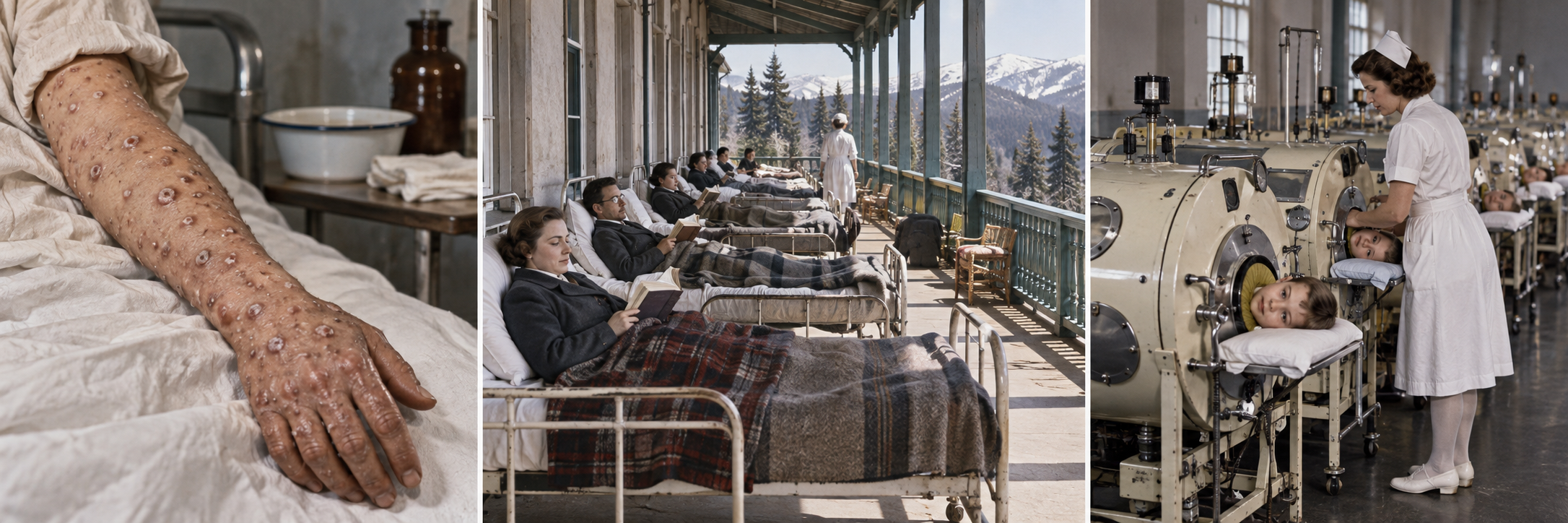
When people no longer see an iron lung, a child with congenital rubella or a diphtheria ward, the small risk of vaccination can feel more vivid than the much larger risk the programme removed.
1Disease becomes rare
→2Fear of disease fades
→3Access or confidence falls
→4Susceptible clusters grow
→5Outbreaks return
Measles
Because measles spreads so efficiently, roughly 95% two-dose coverage is needed to prevent sustained outbreaks. In 2025, global second-dose coverage was 77% and 57 countries reported large or disruptive outbreaks.
Pertussis
Immunity from infection and vaccination wanes, the organism circulates, and diagnosis may be delayed. High coverage, maternal vaccination and timely infant doses reduce severe disease.
Diphtheria
Outbreaks occur where routine programmes are disrupted by conflict, displacement or weak services. Antitoxin can be scarce, making prevention especially valuable.
Tetanus
Spores persist in soil and the environment, so eradication is not realistic. Every person needs direct protection and appropriate wound management.
Polio
Wild poliovirus remains endemic in a small number of settings, and under-immunised communities can experience circulating vaccine-derived poliovirus. Silent spread means surveillance matters.
Smallpox
The last natural case occurred in Somalia in 1977; a laboratory-associated case in Birmingham in 1978 was the last known fatal event. There are no isolated natural cases or animal reservoir. Live variola is officially retained only at two WHO-supervised repositories—the CDC in Atlanta and VECTOR in Russia. Preparedness concerns accidental or deliberate release and the uncertain possibility of undeclared material, not spontaneous natural return.
Trust, evidence and the antivaccine movement
Questions are not the enemy. Bad information is.
Vaccine confidence is damaged by false claims, but also by dismissive communication, unequal access, past medical abuses, opaque policy and systems that make vaccination difficult.
Safety is actively monitored
Clinical trials cannot detect every very rare event. Regulators and surveillance systems continue monitoring after rollout and can change advice when a real signal appears.
Temporal does not mean causal
Health events occur after vaccination by coincidence as well as by causation. Comparison groups, background rates, biological plausibility and repeated datasets help distinguish the two.
No medicine is zero-risk
The honest comparison is vaccine risk versus infection risk for a particular person and setting, including the risk to infants or immunocompromised people who cannot rely on vaccination alone.
Access and hesitancy differ
A missed dose may reflect transport, conflict, clinic hours, cost, stockouts or fragmented records—not ideology. Solutions must fit the reason.
The attention problem
Confidence is not evidence.
An influencer can deliver a vivid personal story to millions in minutes. Scientific conclusions usually arrive more slowly: defined outcomes, comparison groups, confounding analysis, peer review, replication and safety surveillance. Popularity, sincerity and a large audience do not supply those missing steps.
Misinformation also exploits an asymmetry. A frightening claim takes seconds to make; explaining why it is wrong may require statistics, context and uncertainty. Before sharing, ask: Is the claim linked to the original study? Was there a control group? Is an event after vaccination being presented as proof it was caused by vaccination? Do independent regulators and large studies converge?
Populist politics can turn prevention into an identity test. When leaders gain attention by dismissing expertise, attacking independent health institutions or promising certainty where evidence is conditional, vaccination coverage and outbreak response can suffer. Skepticism of authority is legitimate; replacing transparent evidence with loyalty, grievance or viral repetition is not.
The collective consequence is not theoretical. When enough people act on poor risk analysis, infants, pregnant people, older adults and immunocompromised neighbours face outbreaks they cannot fully avoid on their own.
Fluency is not verification.
Generative AI can cheaply produce persuasive false claims, fabricated citations and endless tailored variants. The same tools can help translate reliable guidance, detect information gaps, summarise evidence and support surveillance. The deciding factors are source quality, transparent uncertainty, independent checking and accountable human oversight.
Institutions can be weakened from the top.
As US Health Secretary, Robert F. Kennedy Jr. removed all 17 members of the CDC's vaccine advisory committee in June 2025 and replaced the panel. HHS described the action as restoring trust; many public-health experts warned that abrupt politicisation could instead erode independent review and confidence. The lesson is broader than one politician: scrutiny should strengthen evidence-governed institutions, not substitute personal conviction for them.
The next vaccine century
Prevent infection. Prevent cancer. Sometimes treat disease.
“Cancer vaccine” can mean preventing an infection that causes cancer, teaching the immune system to attack an existing tumour, or making a personalised product from that tumour’s mutations. Those are distinct ideas.
Infection-caused cancers
Hepatitis B and HPV vaccines already prevent cancers. Expanding access and completing schedules may avert more cancer sooner than many experimental technologies.
New tuberculosis vaccines
BCG is one of the world’s most widely used vaccines, but it is not routinely offered to everyone in many lower-incidence countries. It protects young children against severe TB better than it prevents adult pulmonary transmission. Multiple candidates are in clinical development; WHO says a new vaccine could be licensed as early as 2029 if trials succeed.
HIV
HIV mutates rapidly, integrates into host cells and evades antibodies. Broadly neutralising antibodies, mosaic antigens and newer platforms remain under study; no preventive HIV vaccine is licensed.
Therapeutic cancer vaccines
Some experimental vaccines target tumour-specific neoantigens, often alongside checkpoint inhibitors. A few therapeutic products exist, but the field is not one universal vaccine “for cancer.”
mRNA and modular platforms
Platforms may shorten the route from antigen discovery to a testable product and allow regional manufacturing, but efficacy, safety, durability, cold chain, cost and equitable access still require evidence.
Broad and mucosal immunity
Researchers seek universal influenza and coronavirus vaccines, nasal vaccines that reduce infection at its entry point, and vaccines against antimicrobial-resistant bacteria, norovirus, Shigella and other persistent gaps.
A practical check
Which vaccines should I ask about?
This is a discussion guide, not a schedule or medical clearance.
Start with your local routine schedule.
Choose the factors that apply to prepare a more focused discussion.
Evidence library
Read past the headline.
For personal decisions, use your country’s current schedule and product information. These sources support the historical and population-level claims on this page.
JAMA Health Forum · 2025Global lives and life-years saved by COVID-19 vaccination
Ioannidis and colleagues' model for 2020–2024, with age-specific estimates and sensitivity analyses.
WHO · 15 July 2026Global immunisation coverageDTP, measles, HPV, polio and zero-dose estimates.
The Lancet · 202450 years of the Expanded Programme on ImmunizationDeaths averted and years of full health gained from 1974–2024.
WHO · 15 July 2026Measles burden and lives saved2024 infections and mortality, historical burden and vaccination impact.
WHO · 28 April 2025Measles in the AmericasCountry cases, deaths, hospitalisation and vaccination status.
WHO / UNICEF · 2026Coverage and outbreak updateMeasles outbreaks and post-pandemic recovery.
WHOSmallpox eradicationHistory, eradication and present preparedness.
WHOPolio eradicationWild and vaccine-derived poliovirus context.
WHO pipeline trackerVaccines in developmentHIV, TB, malaria, RSV and enteric pathogens.
WHONew tuberculosis vaccinesClinical pipeline and candidate context.
CDCHow vaccine safety is monitoredPre-licensure testing and ongoing surveillance.
WHOQuestions and misconceptionsEvidence-based answers to recurring claims.
NICE · cardiovascular preventionRisk assessment and statin guidanceRisk-targeted lipid treatment and cost-effectiveness evidence.
USPSTF · 2022Aspirin for primary preventionSmall net benefit in selected adults and age-related bleeding harms.
USPSTFColorectal cancer screeningFIT, colonoscopy and other strategies, benefits and burdens.
USPSTFBreast cancer screeningMortality benefit, false positives, biopsies and overdiagnosis.
US National Cancer Institute · 2024Deaths averted by prevention and screeningUS modelling for breast, colorectal and three other cancers, 1975–2020.
CDC · 2024Health and economic value of childhood vaccinationCases, hospitalisations, deaths and costs prevented in US birth cohorts.
HIQA · IrelandColorectal screening health technology assessmentQALYs and programme cost-effectiveness for FIT and other strategies.
Canadian modelling studyMammography cost-effectivenessQALYs and costs across age ranges and screening intervals.
WHOAI for health: promise and misinformation riskGovernance principles for useful, accountable health AI.
US HHS · 9 June 2025Reconstitution of the CDC vaccine advisory panelThe department's account of removing all 17 sitting ACIP members.
National Museum of AustraliaThe 1789 smallpox epidemicHistorical context, evidence and debate about the outbreak affecting Aboriginal communities around Sydney.
American Journal of Public HealthColonisation and Indigenous health disparitiesHistorical synthesis of epidemics, dispossession and population collapse in the Americas.
CDC Emerging Infectious DiseasesIndigenous mortality in the 1918 influenza pandemicComparative evidence from Māori, Pacific and North American populations.
Reviewed 18 September 2026. This site is independent educational material and does not replace a clinician, public-health authority or official national immunisation schedule.